What a gorgeous week it's been weather-wise. I was lucky enough to get out on Wednesday for a trip to the New Forest for work. All of the colours of the heather and the gorse together with the stunning azure sky made a feast for the eyes!
It also got me thinking, as we watched the bees buzzing through the heather, of the feast being created around us through their endeavours. Heather honey is a recognised 'product' in supermarkets, but is obviously not a new thing. It reminded me of a trip to another part of the Forest a couple of years ago, where someone had introduced me to the wonders of 'bee gardens'.
These were small banked enclosures - to protect against the free-ranging livestock - within which hives were set up. They're a relatively common sight across the Forest, if you know where to look. They are hundreds of years old - quite amazing to have survived and a testament to our sweet tooth!
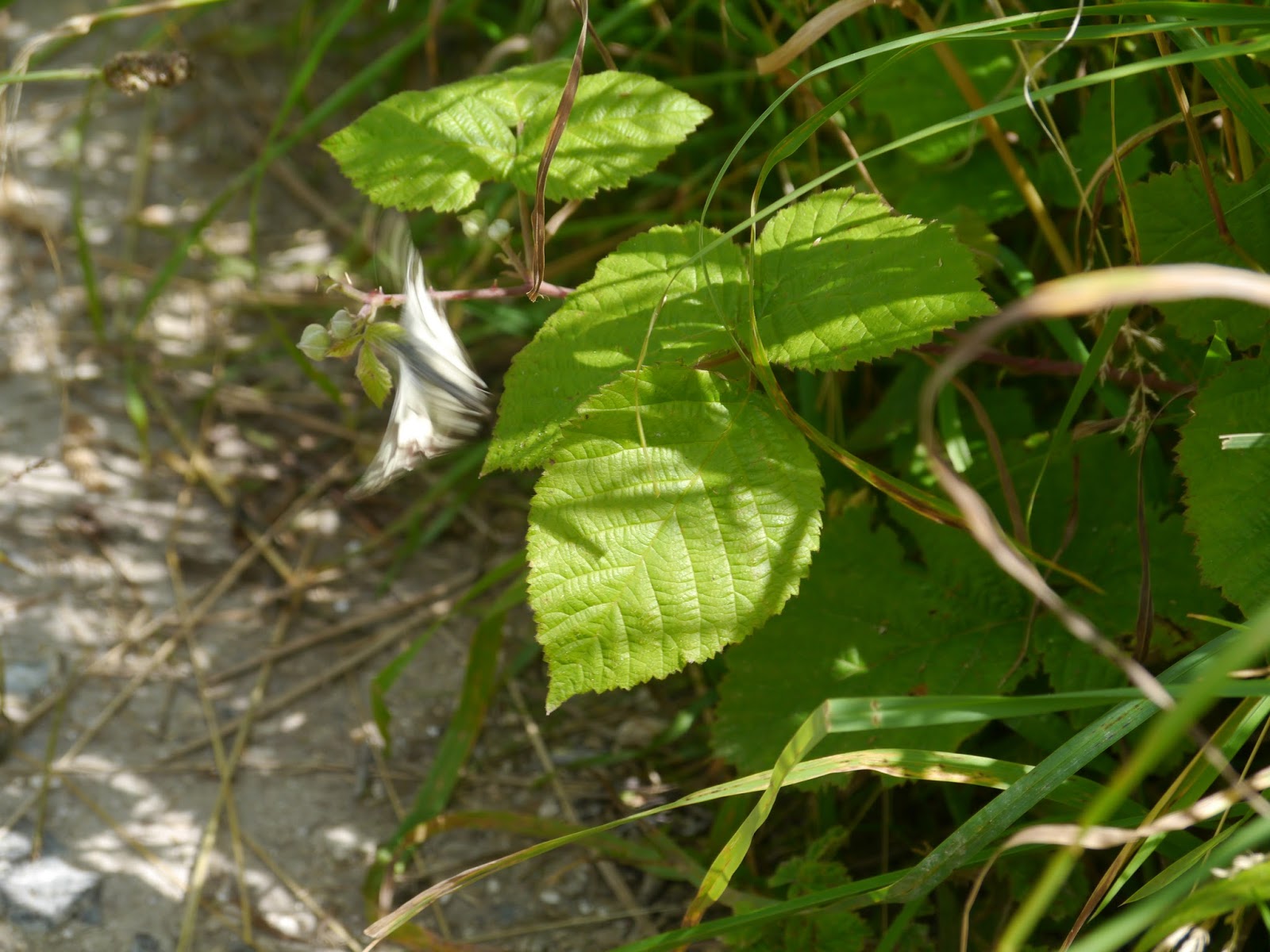
Now is the time for the start of the blackberry harvest, and last Sunday we popped out to Blashford Lakes Nature Reserve near Ringwood to see how our favourite bramble patch was doing. We collected lots, with the peak season still not upon us. Lots to clean and put in the freezer! On the way back, I had a quick look at Dockens water, the small New Forest stream that had been restored a decade earlier from it's previously-straightened self. Now, tea-coloured waters flow over the clean gravels, creating pools and riffles, and many niches for a variety of wildlife.
To contrast, on Bank Holiday Monday we are heading to the River Test for a potter and exploration of the nearby Harewood Forest - an area I've never explored and which nearly became a SSSI several years ago.
Sunday, 28 August 2016
Saturday, 20 August 2016
Correcting the media
Some of you may have seen the article in the Guardian this week from Chris Packham, saying the New Forest was overgrazed and the habitats and species were suffering. Well, from my experiences this year, I would beg to differ.
Last weekend the family opted for a pub lunch as part of a birthday celebration, and then walk through Wellow Common. This is part of the Northern Commons, owned by the National Trust. Here, the turf is very short, heavily grazed by ponies, donkeys and some cattle. Despite this, it was teeming with life.
The common and bell heathers, and cross-leaved heath, were all flowering, forming a mosaic of purple as we walked. Clusters of yellow tormentil, and in wetter patches, spearwort, provided the opposite end of the colour wheel (how does nature do that?). Large heath butterflies flitted from gorse bush to gorse bush, and buzzards wheeled overhead from the adjacent, cooling woodland. It was an idyllic English summer scene.
The New Forest's value comes in part from the mosaic of close-cropped turf (the 'lawns'), taller heath, wetlands and ancient woodland. Many rare species require these conditions - for example, small fleawort positively thrives in habitats that look like the Somme! And where some species may struggle in areas where livestock might favour, there are plenty of other areas that they can survive. On the whole, it all balances out. I haven't seen the Forest looking this good in years, which is a testament to all those involved in positive management of this unnatural landscape.
Spending more time outdoors can have a surprising impact on work productivity, as I found this week! Our management team had a business planning meeting, and a following day of team building, at Testwood Lakes near Totton. We kick-started the session with a picnic buffet outside, overlooking the lakes on a beautiful sunny day, surrounded by dragonflies and bees. We were all subsequently very relaxed going into our business meeting, and came out of it feeling positive and inspired, which rarely happens! We continued this the following day with the team building sessions - being outside the whole day seemed to energise people.
Just think what could happen to our economy if people spent more time outside? Recession, what recession?!
Last weekend the family opted for a pub lunch as part of a birthday celebration, and then walk through Wellow Common. This is part of the Northern Commons, owned by the National Trust. Here, the turf is very short, heavily grazed by ponies, donkeys and some cattle. Despite this, it was teeming with life.
The common and bell heathers, and cross-leaved heath, were all flowering, forming a mosaic of purple as we walked. Clusters of yellow tormentil, and in wetter patches, spearwort, provided the opposite end of the colour wheel (how does nature do that?). Large heath butterflies flitted from gorse bush to gorse bush, and buzzards wheeled overhead from the adjacent, cooling woodland. It was an idyllic English summer scene.
The New Forest's value comes in part from the mosaic of close-cropped turf (the 'lawns'), taller heath, wetlands and ancient woodland. Many rare species require these conditions - for example, small fleawort positively thrives in habitats that look like the Somme! And where some species may struggle in areas where livestock might favour, there are plenty of other areas that they can survive. On the whole, it all balances out. I haven't seen the Forest looking this good in years, which is a testament to all those involved in positive management of this unnatural landscape.
Spending more time outdoors can have a surprising impact on work productivity, as I found this week! Our management team had a business planning meeting, and a following day of team building, at Testwood Lakes near Totton. We kick-started the session with a picnic buffet outside, overlooking the lakes on a beautiful sunny day, surrounded by dragonflies and bees. We were all subsequently very relaxed going into our business meeting, and came out of it feeling positive and inspired, which rarely happens! We continued this the following day with the team building sessions - being outside the whole day seemed to energise people.
Just think what could happen to our economy if people spent more time outside? Recession, what recession?!
Saturday, 6 August 2016
Lazy hazy days of summer
It's been a bit of a whirlwind of socialising, of course, always featuring the Great Outdoors!
Last Friday I introduced a good friend of mine (and her one year old in a push chair) to Martin Down - I should be getting commission on the advocacy of the place! Although a bit overcast and with ominous clouds gathering, the light seemed to pick out the mass of colour in the 'purple season' that is upon us. I'm not quite sure why this is, but it also follows the 'yellow season' - cowslips, hawkbits and yellow rattle give way to knapweed, scabious and harebell, and with them come the butterflies such as dark green fritillaries and marbled whites. The Down is looking absolutely stunning this year, so made an excellent impression on my friend - she can now understand why I keep raving on about the place! We encountered a trio of intrepid mobility-scooterers, who had negotiated their way through the rutted tracks to the very top of the reserve - admirable that they wouldn't let decreased accessibility get in the way of a good view!
I followed this up with a weekend in Kent, visiting an old school friend, who showed me some of the sights. Once again, despite the drizzle and mugginess, the White cliffs of Dover were amazing, and carpeted with wildflowers. I even heard a corn bunting up there, which was surprising given the scrubby nature of the area - they like to sing from fenceposts in wide, open fields usually.
And for once, during the week, I was able to negotiate time away from the desk, not once but twice! On Tuesday we had organised a team meeting on a farm on the upper Itchen - the river was a mass of aquatic plants, forming a green underwater carpet, amongst which trout darted and damselflies skimmed over. Quite idyllic, although on close inspection you could see the diatoms coating some of the vegetation (looking like brown slime) - an indication of phosphate levels being too high, mostly from agricultural runoff. Still much work to be done to improve things.
I also spent a day out on the Dorset Heaths, on a mini tour around the outskirts of Poole, hearing about the restoration work to sites, through hard negotiation with landowners, the complex politics and history, and how they join up on a landscape-scale. Some of the sites had good heather growth in under 5 years - quite staggering, and a testament to the resilience of the natural environment, if given the right conditions. This year seems to be particularly good for the heather, with a vibrant swathe of the different purple tones of bell heather and common heather.
Finally, I've just got back from a quick potter in the New Forest with more friends - Churchplace Enclosure near Ashurst is a mixture of ancient and conifer woodland, and on a hot day like today, the dappled sunlight cast beautiful shadows in the cool depths, with silver-washed fritillaries swooping in the glades, and tormentil flowering on the rides.
Quite a contrast but once again, I marvel at the variety of sites within close reach of Salisbury and, for the most part, the ability of them to 'soak up' people, enabling tranquility and peace, not far from the hustle and bustle of the busy school holidays.
Last Friday I introduced a good friend of mine (and her one year old in a push chair) to Martin Down - I should be getting commission on the advocacy of the place! Although a bit overcast and with ominous clouds gathering, the light seemed to pick out the mass of colour in the 'purple season' that is upon us. I'm not quite sure why this is, but it also follows the 'yellow season' - cowslips, hawkbits and yellow rattle give way to knapweed, scabious and harebell, and with them come the butterflies such as dark green fritillaries and marbled whites. The Down is looking absolutely stunning this year, so made an excellent impression on my friend - she can now understand why I keep raving on about the place! We encountered a trio of intrepid mobility-scooterers, who had negotiated their way through the rutted tracks to the very top of the reserve - admirable that they wouldn't let decreased accessibility get in the way of a good view!
I followed this up with a weekend in Kent, visiting an old school friend, who showed me some of the sights. Once again, despite the drizzle and mugginess, the White cliffs of Dover were amazing, and carpeted with wildflowers. I even heard a corn bunting up there, which was surprising given the scrubby nature of the area - they like to sing from fenceposts in wide, open fields usually.
And for once, during the week, I was able to negotiate time away from the desk, not once but twice! On Tuesday we had organised a team meeting on a farm on the upper Itchen - the river was a mass of aquatic plants, forming a green underwater carpet, amongst which trout darted and damselflies skimmed over. Quite idyllic, although on close inspection you could see the diatoms coating some of the vegetation (looking like brown slime) - an indication of phosphate levels being too high, mostly from agricultural runoff. Still much work to be done to improve things.
Finally, I've just got back from a quick potter in the New Forest with more friends - Churchplace Enclosure near Ashurst is a mixture of ancient and conifer woodland, and on a hot day like today, the dappled sunlight cast beautiful shadows in the cool depths, with silver-washed fritillaries swooping in the glades, and tormentil flowering on the rides.
Quite a contrast but once again, I marvel at the variety of sites within close reach of Salisbury and, for the most part, the ability of them to 'soak up' people, enabling tranquility and peace, not far from the hustle and bustle of the busy school holidays.
Saturday, 23 July 2016
Determined not to melt
Yes, that was me - and pretty much the whole country - this week. Waaay too hot for us Brits on the whole, but despite this, I did force myself outdoors to enjoy the weather.
Last weekend I spent a bit of time in the garden - doing the Big Butterfly Count http://www.bigbutterflycount.org/?gclid=CjwKEAjwq8y8BRCstYTm8qeT9mwSJACZGjUkhnM4SnOzUG_d3rl1H03ms8Qr5pU3kBlSrWA-jQ-vURoCtrbw_wcB, some weeding and taking a moment to appreciate the wealth of invertebrate life buzzing away.
Although my privet hedge is completely out of control and in need of a good prune, the blooms this year are amazing, and subsequently are attracting the whole neighbourhood of bees, together with several butterfly species. So far this week, I've seen red admiral, large white, meadow brown, gatekeeper and small tortoiseshell. And the various flowers I planted a couple of years ago have now really taken hold, so I'll not have to do quite so much weeding soon once they spread out.
And the produce from the garden has started too - I have 4 raspberry canes, which are supposed to flower in the autumn, but one always starts way before the others - I'm now getting one a day, which I'm freezing in the hope of having enough to do something with at some point! My strawberry - whichI planted last year having purchased from the reduced to clear section late in the season - was soon overshadowed by the buddleia, so only one fruit from that this year. The plum tree has four plums on it, but the apple has been hit hard by aphids (and probably my pruning!) so didn't even blossom this year. And the garlic has also been disappointing - just three small bulbs. The tomatoes have suffered with the wet weather of late, but I do have two (yes, two!) on their way but still very green. I'm hoping they'll turn red before the blight gets them all.
Apart form admiring the fruits of my (minimal) labours, I did manage a few quick walks. We pottered off to Langley Wood NNR on the Sunday, and I've had a couple of yomps from the flat down to the river as well. Everything is in bloom and a-buzz with life - it's a wonderful time to be alive!

Last weekend I spent a bit of time in the garden - doing the Big Butterfly Count http://www.bigbutterflycount.org/?gclid=CjwKEAjwq8y8BRCstYTm8qeT9mwSJACZGjUkhnM4SnOzUG_d3rl1H03ms8Qr5pU3kBlSrWA-jQ-vURoCtrbw_wcB, some weeding and taking a moment to appreciate the wealth of invertebrate life buzzing away.
Although my privet hedge is completely out of control and in need of a good prune, the blooms this year are amazing, and subsequently are attracting the whole neighbourhood of bees, together with several butterfly species. So far this week, I've seen red admiral, large white, meadow brown, gatekeeper and small tortoiseshell. And the various flowers I planted a couple of years ago have now really taken hold, so I'll not have to do quite so much weeding soon once they spread out.
And the produce from the garden has started too - I have 4 raspberry canes, which are supposed to flower in the autumn, but one always starts way before the others - I'm now getting one a day, which I'm freezing in the hope of having enough to do something with at some point! My strawberry - whichI planted last year having purchased from the reduced to clear section late in the season - was soon overshadowed by the buddleia, so only one fruit from that this year. The plum tree has four plums on it, but the apple has been hit hard by aphids (and probably my pruning!) so didn't even blossom this year. And the garlic has also been disappointing - just three small bulbs. The tomatoes have suffered with the wet weather of late, but I do have two (yes, two!) on their way but still very green. I'm hoping they'll turn red before the blight gets them all.
Apart form admiring the fruits of my (minimal) labours, I did manage a few quick walks. We pottered off to Langley Wood NNR on the Sunday, and I've had a couple of yomps from the flat down to the river as well. Everything is in bloom and a-buzz with life - it's a wonderful time to be alive!
Friday, 15 July 2016
Beauty in miniature
I've just come back from a lovely walk with a friend on Canada Common near Wellow, on the edge of the New Forest.
This time, the vast plain (closely-cropped by the many ponies and donkeys) was a carpet of colour, although you had to look closely to see it. Some might say that it's overgrazed, and it would certainly appear to be when compared to some of the other commons in the Forest, but all the species are there, just in miniature!
Three species of heather were in flower - common, bell and cross-leaved heath, together with patches of bright yellow spearwort in wetter areas, the precise four-petalled forms of tormentil, and the blue of heath milkwort.
This contrasted greatly with last Sunday's attempt to work off the baked cheesecake! With the sun shining, we headed off to Old Sarum, with the butterflies flitting around in the warmth. It seems to be a good year for marbled whites - I don't usually see them around the hillfort, but they were making the most of the sheltered spots and copious nectar sources (ragwort and hawkbits in the main).
The weather over the weekend is supposed to be vaguely summer-like, so might be a good opportunity to head off to some sunny woodland rides for a bit of butterfly spotting. Don't forget the Big Butterfly Count starts this weekend, running until the 7th of August - more info on the Butterfly Conservation website.
This time, the vast plain (closely-cropped by the many ponies and donkeys) was a carpet of colour, although you had to look closely to see it. Some might say that it's overgrazed, and it would certainly appear to be when compared to some of the other commons in the Forest, but all the species are there, just in miniature!
Three species of heather were in flower - common, bell and cross-leaved heath, together with patches of bright yellow spearwort in wetter areas, the precise four-petalled forms of tormentil, and the blue of heath milkwort.
This contrasted greatly with last Sunday's attempt to work off the baked cheesecake! With the sun shining, we headed off to Old Sarum, with the butterflies flitting around in the warmth. It seems to be a good year for marbled whites - I don't usually see them around the hillfort, but they were making the most of the sheltered spots and copious nectar sources (ragwort and hawkbits in the main).
The weather over the weekend is supposed to be vaguely summer-like, so might be a good opportunity to head off to some sunny woodland rides for a bit of butterfly spotting. Don't forget the Big Butterfly Count starts this weekend, running until the 7th of August - more info on the Butterfly Conservation website.
Sunday, 10 July 2016
Overlooked beauty
I forced myself out of the house, after work on Monday, for a quick yomp through the Stratford Reserve. It was a muggy, overcast evening, but the dull light seemed to intensify the colours of the vegetation.
In particular, I was struck by the variety of colours and forms of the grasses that had been left to grow especially long. Timothy grass - purplish 'cats' tails' of flower heads, drooping yellowish false oat grass, mingling with the stiff, dark green heads of rye grass.
The walk also runs along some arable fields, and it is clear that the farmer is in an environmental stewardship scheme, as their field corner has been left unsown - it's alive with insects including marbled white butterflies, and has a great variety of grasses itself, as well as wildflowers such as common knapweed.
I'm no expert on grasses and as an ecologist I struggle to retain the knowledge on identifying species, but this year I feel I've discovered how beautiful they can be, which has really helped in remembering certain species. Of course, it's difficult unless you're regularly outside surveying, which I am not these days, sadly.
However, saying that, I did manage to persuade some of my team to take me out on a day of site visits connected to protected species licensing for works. The first site was on an MoD rifle range with stunning views out across the Fleet to Chesil beach. Both are SSSIs, due in part to the unusual formation of Chesil beach - a stretch of shingle connecting the mainland with the Isle of Portland. Tt encloses the largest saline lagoon in Britain ('the Fleet'). Both are also internationally important for the breeding and overwintering birds they support, notably breeding little terns. For me, this pat of the world brings back childhood memories. my Granny lived in Upwey just down the road, and we would often pop to the Abbotsbury swannery on the shores of the Fleet.
This weekend the Wimbledon finals will likely prevent any outdoor excursions!
In particular, I was struck by the variety of colours and forms of the grasses that had been left to grow especially long. Timothy grass - purplish 'cats' tails' of flower heads, drooping yellowish false oat grass, mingling with the stiff, dark green heads of rye grass.
The walk also runs along some arable fields, and it is clear that the farmer is in an environmental stewardship scheme, as their field corner has been left unsown - it's alive with insects including marbled white butterflies, and has a great variety of grasses itself, as well as wildflowers such as common knapweed.
I'm no expert on grasses and as an ecologist I struggle to retain the knowledge on identifying species, but this year I feel I've discovered how beautiful they can be, which has really helped in remembering certain species. Of course, it's difficult unless you're regularly outside surveying, which I am not these days, sadly.
However, saying that, I did manage to persuade some of my team to take me out on a day of site visits connected to protected species licensing for works. The first site was on an MoD rifle range with stunning views out across the Fleet to Chesil beach. Both are SSSIs, due in part to the unusual formation of Chesil beach - a stretch of shingle connecting the mainland with the Isle of Portland. Tt encloses the largest saline lagoon in Britain ('the Fleet'). Both are also internationally important for the breeding and overwintering birds they support, notably breeding little terns. For me, this pat of the world brings back childhood memories. my Granny lived in Upwey just down the road, and we would often pop to the Abbotsbury swannery on the shores of the Fleet.
This weekend the Wimbledon finals will likely prevent any outdoor excursions!
Saturday, 2 July 2016
The canal conundrum and other stories
Last weekend I visited a friend in Essex, where, in between the showers, we managed a morning rowing on the Chelmer and Blackwater Navigation. Coming from Wiltshire, with its history of canals, the contrast was stark.
In Devizes - where I used to work- the Kennet and Avon canal is heavily used by large narrow boats (sounds like an oxymoron!), but in Essex the only moving watercraft we encountered in 2 hours was the tourist boat doing trips up and down the canal, and another rowing boat. The banks were lined with a thick carpet of yellow and white water lilies, and the tall stems of branched bur-reed. The water was clear and fished by common terns flying overhead. A far cry from The K&A, where the constant traffic stirs up the sediments and prevents larger plants from settling. This results in a pea-soup, home only to rats, and a few waterfowl and water voles if they're lucky.
Before my visit to Essex, I managed a quick yomp up to Clarendon Park, as I mentioned in my previous post. It always surprises me that this extremely important historical site - with its royal hunting lodge patrolled by llamas - as well as having great views back to Salisbury, and beautiful ancient woodland, is completely devoid of visitors. It's right on the doorstep of so many people - but then that's fine with me, as it wouldn't be nearly so enjoyable if the hordes descended on it!
This weekend will probably involve a bit of gardening - my near-vertical slope of a garden has got out of hand again. But on the plus side, random plants are making their way in - some sort of vetch has established itself in the intentionally-wild corner (where the bramble is in need of taming), and cut-leaved cranesbill has seeded into one of the troughs next to a tomato plant. I right mish-mash of stuff! Lots of meadow brown butterflies are fluttering around, together with various bees, so the garden is finally becoming the wildlife haven I had hoped for.
In Devizes - where I used to work- the Kennet and Avon canal is heavily used by large narrow boats (sounds like an oxymoron!), but in Essex the only moving watercraft we encountered in 2 hours was the tourist boat doing trips up and down the canal, and another rowing boat. The banks were lined with a thick carpet of yellow and white water lilies, and the tall stems of branched bur-reed. The water was clear and fished by common terns flying overhead. A far cry from The K&A, where the constant traffic stirs up the sediments and prevents larger plants from settling. This results in a pea-soup, home only to rats, and a few waterfowl and water voles if they're lucky.
Before my visit to Essex, I managed a quick yomp up to Clarendon Park, as I mentioned in my previous post. It always surprises me that this extremely important historical site - with its royal hunting lodge patrolled by llamas - as well as having great views back to Salisbury, and beautiful ancient woodland, is completely devoid of visitors. It's right on the doorstep of so many people - but then that's fine with me, as it wouldn't be nearly so enjoyable if the hordes descended on it!
This weekend will probably involve a bit of gardening - my near-vertical slope of a garden has got out of hand again. But on the plus side, random plants are making their way in - some sort of vetch has established itself in the intentionally-wild corner (where the bramble is in need of taming), and cut-leaved cranesbill has seeded into one of the troughs next to a tomato plant. I right mish-mash of stuff! Lots of meadow brown butterflies are fluttering around, together with various bees, so the garden is finally becoming the wildlife haven I had hoped for.
Subscribe to:
Posts (Atom)